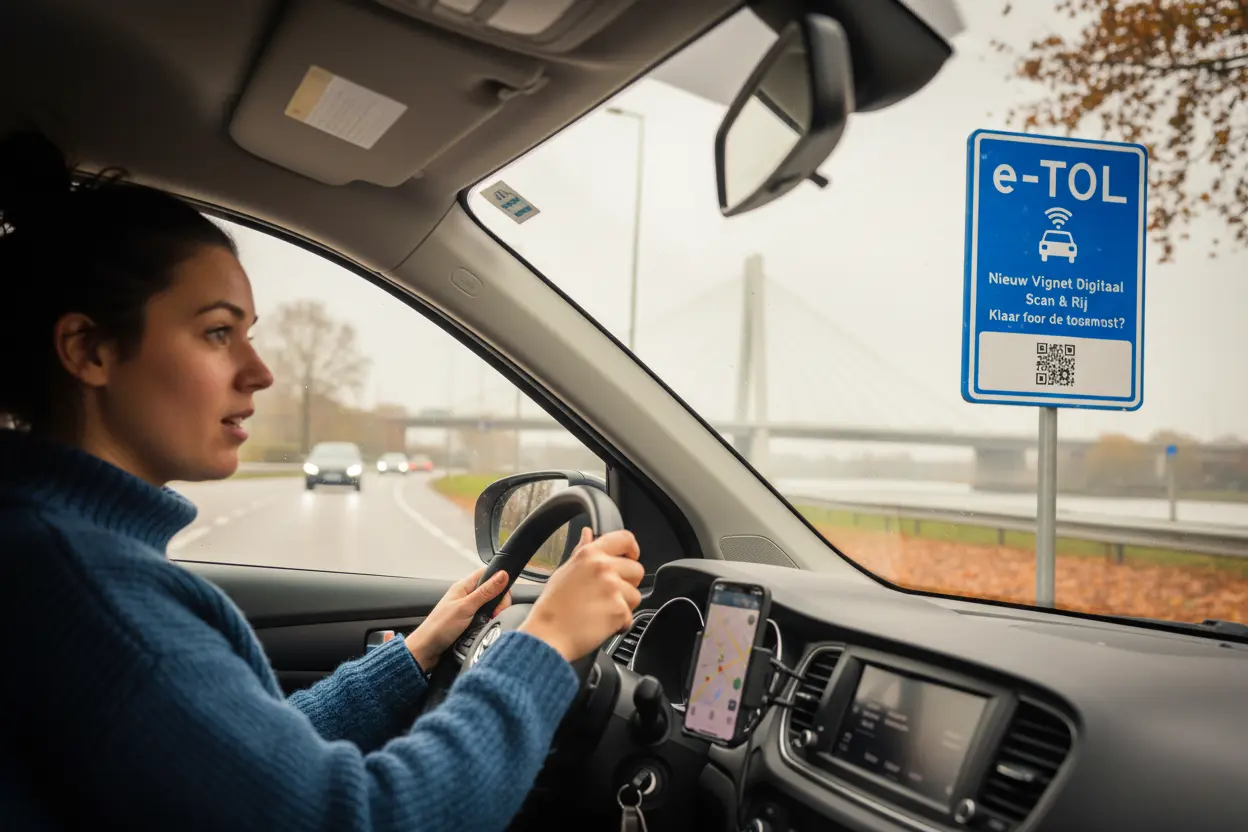
You’re cruising down the A24 near Rotterdam, soaking in that Dutch efficiency—then, suddenly, a new blue road sign flashes by: e-TOL. It looks harmless enough, yet this unassuming board is about to shake up the way you drive and pay. Ready or not, e-TOL is here. But what does it want from you, and how do you dodge an unwanted reminder—or, worse, a fine in your mailbox? Read on to find out how this next-generation toll system works, why you should care, and what you need to do before your next ride.
Spotting e-TOL: What’s New on the A24?
The e-TOL sign is the latest addition to the A24 (Blankenburg connection) near Rotterdam—a truly modern road now equipped with more than just gleaming tarmac. Instead of traditional toll booths and lifting barriers, you get to drive straight through. Your license plate is snapped by a camera, you pay online, and the system gives you a generous 72-hour window to settle your dues. No fumbling for coins, no need to brake. But don’t let convenience lull you into complacency; there’s a routine to follow.
As you drive along the A24, you’ll now encounter four specially designed, multilingual e-TOL boards guiding you every step of the way:
- First: The choice of route—pay the toll, or take the alternative.
- Second: Tariffs displayed per vehicle type.
- Third: A heads-up that you’re approaching a camera-equipped toll portal.
- Finally: Instructions to pay via e-tol.nl within 72 hours after your trip.
Consider these signs your new travel companions—a little more practical than a playlist, perhaps.
No Barriers, Just Data: How This Modern System Works
This newcomer is part of a cutting-edge toll system with no physical barriers. Here’s the simple recipe:
- Your license plate is automatically registered as you drive through.
- You can pay before you leave, have it deducted automatically, or pay afterwards online—with up to 72 hours post-trip, or as early as seven days before.
This digital tolling isn’t just smart; it’s also fair. Cars, delivery vans, and motorcycles enjoy relatively low rates. Larger vehicles over 3,500 kilograms pay more—a nice incentive to travel light, if you needed one.
The Payment Trap: How to Avoid Fines and Frustration
Paying sounds easy—but the system flips autopilot on your routine. If you miss the window (that’s 72 hours!), trouble knocks on your postal door. Early on, about one in five drivers simply forgot to pay in time. The government currently sends a reminder letter if you slip up. But here’s the real wake-up call: from December 2025, additional administration costs will pile on if you don’t pay promptly. Ignore that as well, and a full-on fine lands on top of your original toll.
So, pro tip:
- Pay immediately after your ride or set up automated payments.
- The A24 may be the testing ground, but e-TOL boards are set to multiply as the government uses temporary tolls to help finance new routes (see: project ViA15 on the horizon).
- Get used to the sight of e-TOL—it’s here to stay.
Routine, Not Roadblock: Making e-TOL Work for You
When you see e-TOL appear above, the etiquette is simple: keep driving, pay online, and you’re done. Choose automated payment, or give yourself a quick post-drive check. Either way, paying your toll should be as smooth as the drive itself. Instead of a dreaded trap, this road sign can become a time-saver, sparing both paperwork and nerves.
The bottom line? Don’t let e-TOL’s sleek blue face catch you off-guard. Learn its rules, pay attention to its signs, and turn every passage into a breeze. The Dutch are simply asking you to swap coins and queues for clicks and quickness—who can argue with that?

John is a curious mind who loves to write about diverse topics. Passionate about sharing his thoughts and perspectives, he enjoys sparking conversations and encouraging discovery. For him, every subject is an invitation to discuss and learn.