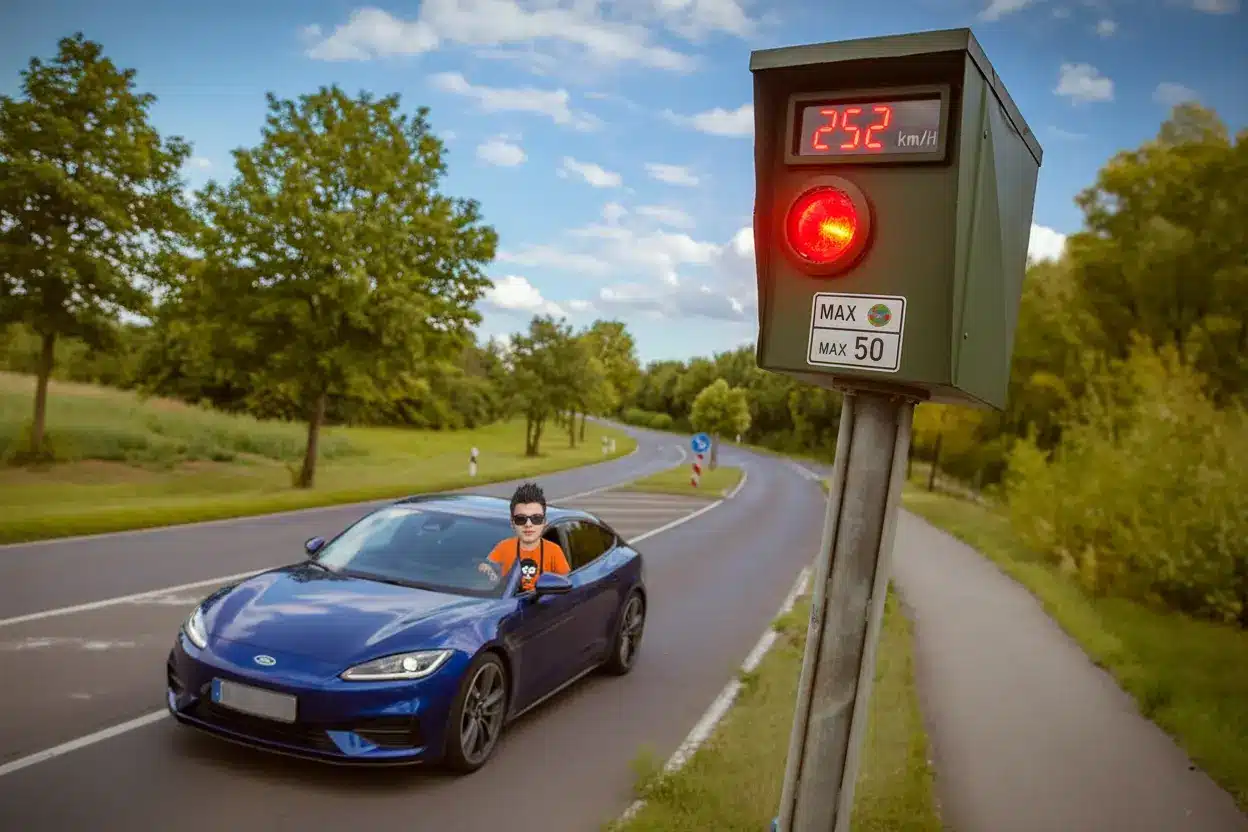
Imagine cruising through a posh German island, the wind in your hair, the horizon ahead, and—whoops—your speedometer blasts past 252 km/h in a zone meant for a peaceful 50 km/h. Surely, your next stop is the local police station, right? On Sylt, playground of the German jet set, one driver pulled exactly this stunt. But when the dust settled, the most shocking thing of all happened: absolutely nothing.
An Unbelievable Scene on Sylt
In the heart of Sylt—the elegant Wadden Sea island famed for its vacationers and luxury beach houses—the summer brought a story barely believable even for seasoned locals. An automobile was observed, or rather clocked, at a hair-raising 252 km/h through a residential area with a 50 km/h speed limit. You’d be forgiven for expecting the usual consequences:
- Immediate loss of license
- Hefty fine
- Months-long driving ban
But rather than a flurry of tickets, court summons, and the kind of lecture that leaves you rethinking life’s decisions, there came… nothing. No penalty. Not a single official rebuke. How, in a country renowned for its order, can this be possible?
The Curious Case of the Dialogue Display
Here’s where things get both technical and downright bizarre. Sylt, like hundreds of other German municipalities, relies on so-called « dialogue displays »—those electronic speed signs that either beam a friendly smiling face when you’re within the limit or put your overzealous speed up in numbers for all to see. They aim to warn drivers, not to fine them. No nasty surprises, just a friendly nudge or a digital frown from the roadside.
But here’s the snag: while these boards measure your speed with unerring accuracy, they crucially do NOT snap a picture. There is no evidence of who was behind the wheel or even which car was involved. Legally, that means nothing sticks. No proof, no penalty.
So if you’re feeling the urge to live out your racing driver fantasy in a residential area, you may (theoretically!) get away with it—at least in Sylt. According to Germany’s fine catalog, such an egregious breach would normally cost you 800 euros, two penalty points, and a three-month ban from driving. If the authorities believe it was intentional, the fine could double—up to 1,600 euros. Yet without a single snapshot, it’s as if the whole thing never happened.
The High Score Game No One Asked For
Strangely, this isn’t a one-off. Local authorities report regularly encountering such stratospheric speeds on their displays, with no consequences for those behind the wheel. And the story gets a playful, if troubling, twist: social media is abuzz with accounts of drivers treating these displays as a “high score” game. The logic? The bigger the number flashing back at you, the bigger the thrill. Forget The Fast and the Furious; welcome to Sylt’s version of leaderboard racing.
Traffic psychologists are sounding alarms. These displays were invented to raise awareness about speed—not to inspire some road-going leaderboard. For most, it’s a nudge toward responsibility. But for a small group, the displays are an open invitation to see how high their numbers (and perhaps their egos) can go. Ironically, this makes them a new kind of traffic safety risk.
Legal Limbo and the Technical Loophole
Meanwhile, a legal storm is brewing in Germany: can speed readings—without hard proof like photos—be used in court cases about fines? The country’s highest federal court, the Bundesgerichtshof, is now grappling with whether speed data, collected with no pictures and no hard data stored, can stand up in court at all.
Until there’s a ruling, municipalities are erring on the side of caution: nothing happens with the readings. No fines, no follow-up, just digital numbers winking at passing thrill-seekers.
In pure technical terms, it’d be simple enough to add cameras to these displays or replace them with proper speed enforcement cameras. But that’s not happening—yet. Political will and money are the missing ingredients. Until they materialize, drivers with a need for speed can break records through sleepy neighborhoods with legal impunity.
This story reveals how a small technical detail—no snapshot—spawns a giant legal loophole. The speed display might chirp 252 km/h without a care in the world, but the driver goes on, untouched and unpenalized. It’s left residents scratching their heads and traffic safety experts fuming. And until politicians step in with solutions, many road users are left wondering: how much are these displays really worth, if they promise no consequences?

John is a curious mind who loves to write about diverse topics. Passionate about sharing his thoughts and perspectives, he enjoys sparking conversations and encouraging discovery. For him, every subject is an invitation to discuss and learn.