A Promising Leap with Solid-State Batteries
Mercedes-Benz has just announced a pivotal move in the electric vehicle (EV) arena: a new model fitted with solid-state batteries, slated for launch as early as 2030. This technological breakthrough, developed in partnership with U.S.-based company Factorial, could shake up the market. With competition heating up—especially from BMW and a host of Chinese manufacturers—all eyes are glued to Mercedes and its bold promises.
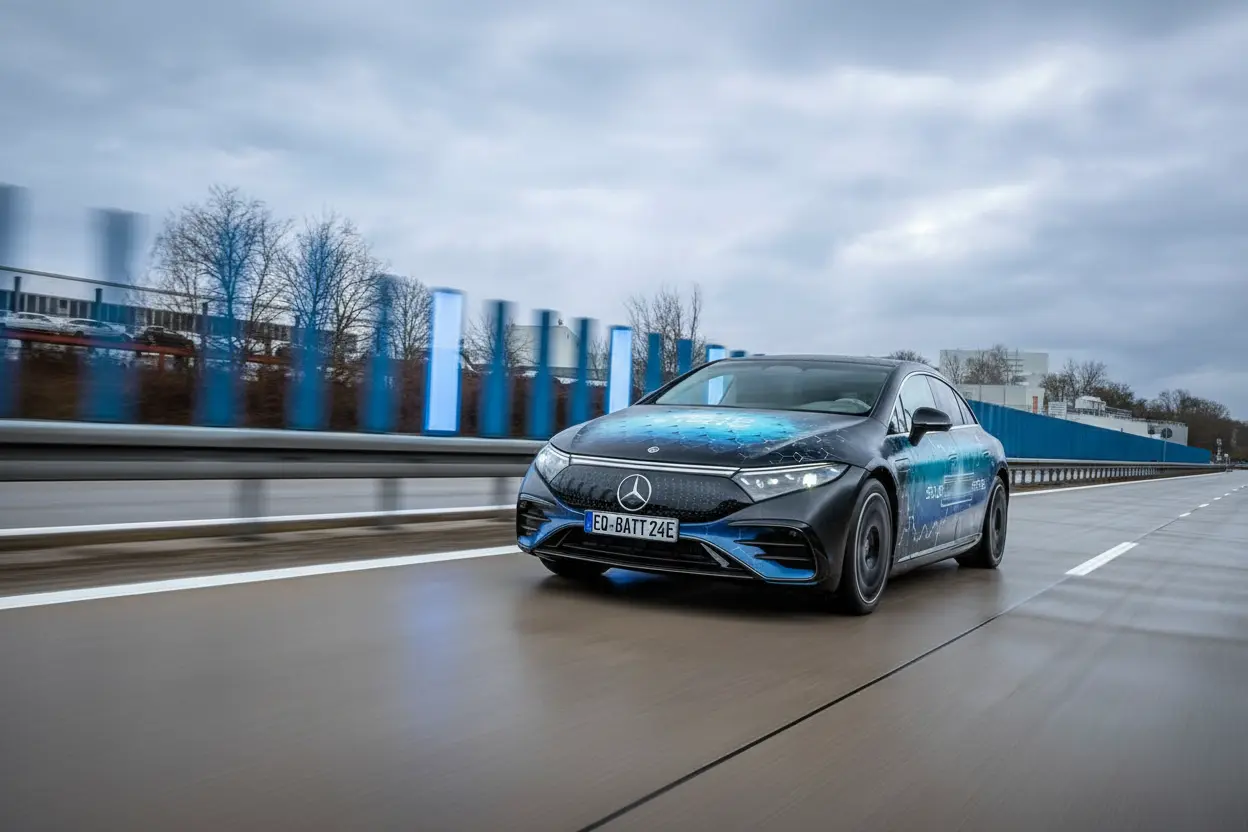
Starting in 2025, Mercedes will begin real-world testing of prototypes equipped with this revolutionary battery. The collaboration with Factorial, well-known for its expertise in solid-state battery tech, underscores Mercedes’ determination to take the lead in this segment. As Markus Schäfer, head of R&D at Mercedes, pointedly noted,
“Mass production by the end of the decade is an absolute priority.”
Driving Past Lithium Limitations
Mercedes’ ambitions are clear: they want to dramatically boost EV performance by overcoming the current limitations of liquid lithium batteries. But they’re not the only ones racing to cross the finish line. BMW is working on a similar project, aiming to release its models in the same time frame. The rivalry is real, and the stakes couldn’t be higher.
So, what exactly makes solid-state batteries so tantalizing? Here’s what they’re promising:
- 25% Increase in Range: Mercedes has its sights set on the impressive number of 1,000 kilometers (roughly 620 miles) on a single charge for its flagship models—a dream for countless drivers.
- Lighter Battery Packs: These batteries weigh less, helping improve everything from acceleration to handling.
- Higher Energy Density: More energy packed into less space means better performance overall.
Not All Smooth Roads Ahead
This all sounds great on paper, but Mercedes still faces plenty of obstacles. The technology, while promising, is far from easy to perfect. There are technical hurdles, such as ensuring the long-term durability of the battery materials and safely managing heat. Plus, the development and production costs for solid-state batteries could be sky-high—potentially holding back widespread adoption.
Despite these bumps in the road, enthusiasm is running high at Mercedes, which is determined to be a trailblazer in both technology and environmental stewardship. By working closely with Factorial, the goal is to gradually overcome these obstacles and be ready for that all-important market launch.
The Race Is On: Who Will Take the Lead?
Whether it’s Mercedes or BMW, the sprint toward the next generation of electric cars is accelerating. Between relentless tech innovation and the need to rein in costs, these industry heavyweights only have about a decade to turn their big ambitions into reality. And in this high-stakes competition where every kilometer gained matters, it’s anyone’s guess who’ll emerge on top.
Will a 1,000-kilometer range on a single charge become the standard in just a few years? All signs seem to point that way, but the jury’s still out. Place your bets!

John is a curious mind who loves to write about diverse topics. Passionate about sharing his thoughts and perspectives, he enjoys sparking conversations and encouraging discovery. For him, every subject is an invitation to discuss and learn.